


Best Family-Friendly Countries in 2026: Where to Live and Raise Children

- Why Family-Friendly Countries Matter (Criteria for 2026)
- Top 10 Countries to Raise a Family in 2026
- Comparative Snapshot of Key Family Metrics
- Safest Countries for Families (Peace & Security)
- Most Affordable Countries to Raise a Family
- Best Work-Life Balance & Parental Support
- Education and Healthcare Excellence
- How to Choose the Right Country for Your Family
- Conclusion: Thriving as a Family in 2026
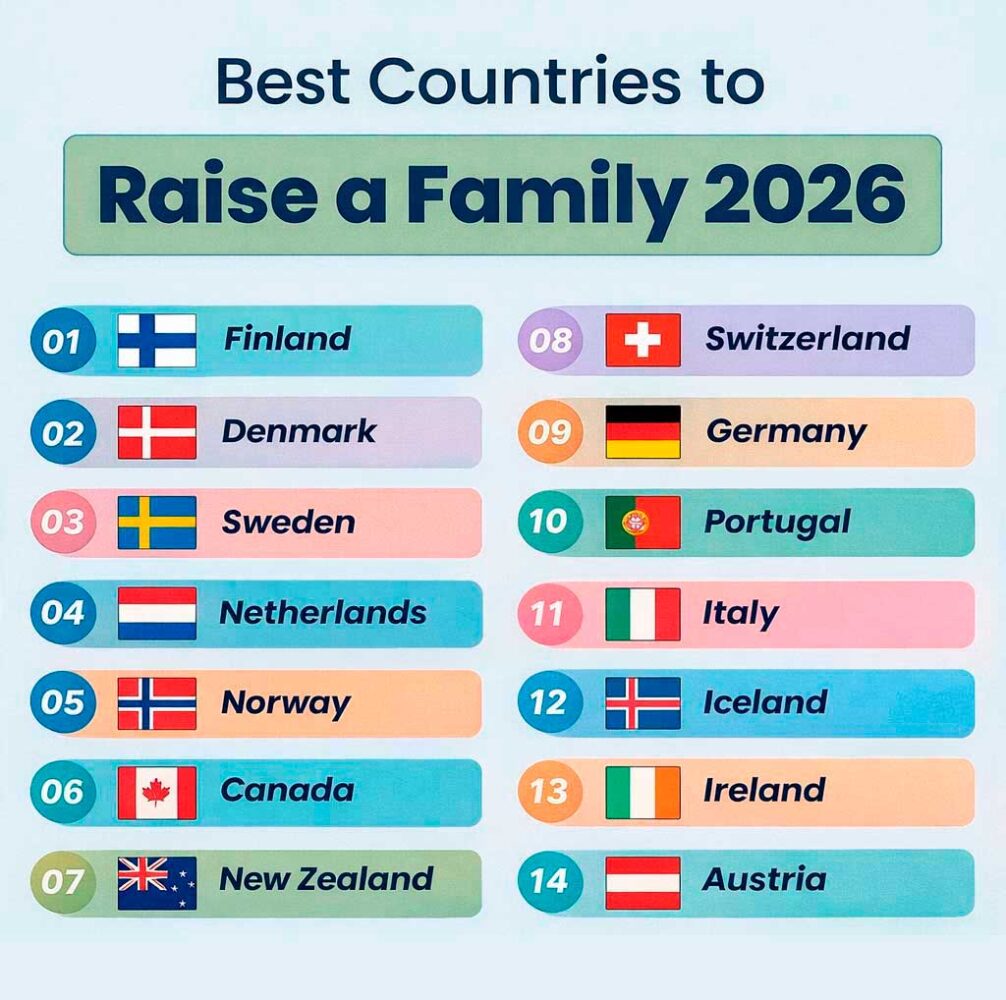
The best countries to raise a family in 2026 combine safety, high-quality education, affordable healthcare, and family-friendly policies. Nations like Sweden, Denmark, Norway, Finland, and the Netherlands consistently top global rankings thanks to low crime rates, excellent schools, generous parental leave, and strong work-life balance. Other countries such as Canada, Switzerland, Australia, New Zealand, and Austria also offer outstanding quality of life for families – with clean environments, stable economies, and supportive social systems.
Below, we break down the top family-friendly countries and key factors (safety, affordability, education, healthcare, work-life balance) that make them ideal for raising children in 2026, supported by the latest data and rankings.
Why Family-Friendly Countries Matter (Criteria for 2026)
Choosing where to raise a family is a big decision. The ideal country provides peace of mind for parents and opportunities for children to thrive. Key criteria include: Safety and stability, education quality, healthcare access, cost of living and childcare affordability, parental leave and child benefits, and work-life balance for parents. High-ranking family-friendly nations tend to have low crime and conflict, excellent schools, universal healthcare, supportive family policies, and a high standard of living. Notably, countries that excel in these areas – often in Northern Europe and other developed regions – also rank highly in overall quality-of-life and happiness indexes. In 2025/2026, organizations like OECD, UNICEF, and Numbeo have published data that allows us to compare countries on these family-relevant metrics.
To determine the best countries to raise a family, we look at objective benchmarks. For safety, the Global Peace Index provides a ranking of peaceful (safe) countries. For education, OECD PISA scores and UNICEF child well-being rankings indicate how well children learn and develop. Healthcare quality can be gauged by coverage and outcomes (e.g. all the top countries have universal healthcare). Affordability is assessed via cost-of-living indices (like Numbeo) and measures of housing/childcare costs. Work-life balance and family policy are reflected in average working hours, vacation time, and parental leave lengths (often tracked by the OECD and national databases). We also consider surveys such as U.S. News & World Report’s “Raising Kids” ranking and UNICEF’s Innocenti Report Card on child well-being for a comprehensive view.
If you’re planning to move abroad with your family, it’s important to carefully evaluate these factors and choose the right country for your long-term goals. Leave a request for a consultation to get personalized guidance and find the best destination and immigration pathway for your family.
Schedule a free consultation and get detailed information from Unioncitizenship lawyers. Start the process today!

Top 10 Countries to Raise a Family in 2026
Based on a synthesis of recent rankings and data (2024–2026), the following ten countries emerge as the best places for families. These nations score high across multiple factors – safety, education, healthcare, cost of living vs. income, and family support policies:
- Sweden – Overall family paradise with generous leave and education. Sweden tops many lists for raising a family. Parents enjoy 16 months paid parental leave (480 days at ~80% pay) that can be shared between mothers and fathers. Childcare and preschool are subsidized and widely available. Education is high-quality and free; Swedish schools emphasize well-being and skills over high-pressure exams. The country is very safe (low crime and a peaceful society) and offers universal healthcare. Work-life balance is excellent – the average work week is only ~37 hours with 5 weeks of vacation standard. Sweden’s combination of social welfare, outdoor recreation, and child-centered culture means children grow up in a supportive environment. (It ranked #1 in a 2026 family life index and is consistently among the happiest countries as well.)
- Denmark – Safe and happy with unrivaled work-life balance. Denmark is often rated the world’s happiest or close second and is exceptionally family-friendly. It boasts universal healthcare and tuition-free education through college. Crime rates are very low (Denmark ranks in the top 5 safest globally), so children grow up in secure surroundings. Parents are entitled to 52 weeks of parental leave (with a portion reserved for each parent), and childcare costs are capped by law, making daycare affordable. Danish culture strongly values time for family: the work week is among the shortest worldwide (around 37 hours) and flexible hours are common. Nearly everyone bikes, and even young kids safely cycle to school on protected paths. With clean cities, playgrounds on every corner, free healthcare, and paid leave, Denmark provides peace of mind and a high quality of life for families. (Happiness Rank 2024: #2; GPI Peace Rank: top 5).
- Norway – Prosperous, nature-rich, and supportive of families. Norway combines high safety and stability with an excellent social support system. It consistently ranks near the top for peacefulness (among the safest countries in Europe) and has a very high standard of living. Healthcare is universal (free for kids under 16 and for maternal care), and education outcomes are strong – Norwegian schools emphasize inclusive education and rank well in international assessments. Parents benefit from generous leave policies similar to other Nordics (around 49 weeks paid leave for mothers and fathers combined, with flexible use). Norway’s oil wealth has been invested in public welfare: families receive monthly child benefits and heavily subsidized childcare. Importantly, Norwegians enjoy a work-life balance that allows family time – typical working hours are reasonable and employees can take time off if a child is sick. With its pristine environment and outdoor culture (think family skiing and hiking on weekends), Norway offers a healthy setting for kids to grow up.
- Netherlands – Top in child well-being and part-time work culture. The Netherlands was ranked #1 in UNICEF’s 2025 report on child well-being across wealthy countries. Dutch children score highly in mental health, physical health, and skills, reflecting a balanced upbringing. The country is very safe and peaceful, with low crime rates. A unique strength is the Dutch work culture – many parents (especially mothers) work part-time or flexible hours, so families spend more time together. In fact, the Netherlands leads the world in work-life balance metrics, with very few people working extreme hours. Education is excellent (literacy and math skills are well above international averages) and most schools offer a mix of academic and practical learning, often in a less pressurized atmosphere. Children’s voices are valued; many schools even have “children’s councils” to involve students in decisions. Nearly everyone speaks English, which helps expat families. On quality-of-life indices, the Netherlands scores highest globally (Numbeo QoL Index ~213 in 2026), thanks to its combination of safety, healthcare, and prosperity. All this, plus state-subsidized healthcare and generous EU-standard parental leave, makes the Netherlands one of the best places to raise happy and healthy kids.
- Canada – Family-friendly cities and universal healthcare. Canada is the top-ranking Americas country for families. It offers a safe, politically stable environment (crime rates are low, and Canada is peaceful internationally). Healthcare is universal – all residents have access to taxpayer-funded healthcare with no out-of-pocket doctor fees, a huge relief for parents. Education is high-quality: Canadian public schools rank among the best in the world, often scoring above the U.S. and UK in math, reading, and science. Culturally, Canada is very welcoming and multicultural, easing the transition for expat families. Parental leave: Canadians can take up to ~12 to 18 months of parental leave (through a combination of federal employment insurance benefits and employer top-ups) – one of the longest in the Western hemisphere. Childcare can be costly in some parts of Canada, but provinces are moving to subsidize it. Notably, Québec offers daycare for about $10 a day (roughly CAD $168 per month on average in Montreal), making it incredibly affordable for young families. Cities like Calgary, Toronto, Vancouver, Ottawa regularly rank high in safety and livability. For housing, Canadians often enjoy more space (many families live in suburban homes with yards). With its clean environment, high average income, and strong public education and health systems, Canada provides an excellent quality of life for raising children.
- Finland – Education powerhouse and world’s happiest country. Finland is famed for its education system, which emphasizes equal opportunity and stress-free learning – Finnish students consistently perform well academically (PISA scores are above OECD average in science and reading). The country is extremely safe (Finland ranks in the top 10 on the Global Peace Index), and it has robust social services. All residents have universal healthcare (the public Kela system covers everyone). Finland also leads in happiness, ranking #1 in the World Happiness Report for several years running – a sign of overall life satisfaction. For new parents, Finland offers paid parental leave of 320 workdays total, which can be split between both parents (160 days each). Childcare and preschool are heavily subsidized or free; moreover, parents receive a “baby box” with newborn essentials courtesy of the government (a tradition for decades). Finnish cities are very family-friendly: Helsinki, for example, has clean parks, libraries with play areas, efficient pram-accessible public transport, and even public baby saunas! Additionally, nature is never far – families take weekend trips to forests and lakes, reinforcing a healthy upbringing. Overall, Finland makes everyday parenting feel secure and supported, from free education and subsidized daycare to child healthcare and community facilities.
- Switzerland – High quality of life and top-notch healthcare. Switzerland offers an exceptional standard of living and is a great place to raise a family if you can manage the costs. It is one of the safest countries (very low crime and political stability) and also highly ranked on human development and income. Children in Switzerland benefit from excellent healthcare (the system is mixed public-private but achieves universal coverage via mandatory insurance; quality of care is world-class). Public education is strong, with a mix of academic and vocational tracks – Swiss students have high skill levels and there are many international schools as well. Outside of academics, Swiss cities like Zurich and Geneva are clean, orderly, and packed with family attractions (museums, zoos, parks), and the Alps provide endless outdoor adventures. Work-life balance is decent – while Swiss employees work slightly longer hours on average than some Europeans, they also enjoy high productivity, ample vacation, and protected family leave rights. Parental leave in Switzerland is improving (mothers get 14 weeks paid, and new laws have introduced paternity leave of 2 weeks with proposals for more). Notably, UNICEF ranks Switzerland 6th in the world for overall child well-being, reflecting strong performance in children’s health, safety, and skills development. The main downside is cost: Swiss cities have a high cost of living (Numbeo index ~111, meaning 11% higher than New York City), but high salaries and public services (like free schools) offset this. For those who can afford it, Switzerland’s safe environment, clean air, and superb infrastructure make it a top family destination.
- Australia – Sunny climate, strong education, and laid-back lifestyle. Australia is a highly developed country that consistently ranks well for quality of life. For families, Australia offers safety (low violent crime and strict gun laws), lots of space and nature, and a renowned education system. Australian public schools and universities are high quality (with literacy rates ~99% and a strong emphasis on sports, arts, and outdoor education). Healthcare is universal through Medicare, so basic medical treatment for kids doesn’t break the bank. Culturally, Australia is very family-oriented – weekends are often filled with beach trips, barbecues, and sports. Cities like Melbourne, Sydney, Perth, Brisbane regularly score high on global livability indexes, featuring parks, playgrounds, and family amenities. The government provides paid parental leave (currently about 18 weeks for the primary caregiver at the national minimum wage, with possible additional employer provisions) and offers child care subsidies to help with daycare costs. Work-life balance is generally good: Australians value leisure time and there are legal minimums of 4 weeks paid annual leave for workers. One of Australia’s strengths is the healthy environment – clean air, strict food safety, and endless outdoor opportunities keep children active. From an economic perspective, job opportunities are strong and wages are high, though the cost of living (especially housing in major cities) can also be high. Still, with its English-speaking, multicultural society and excellent public services, Australia remains a popular choice for expat families and was ranked among the top 10 countries for raising kids in recent surveys.
- New Zealand – Safe, small, and naturally beautiful. New Zealand is often considered one of the most peaceful countries on Earth – it ranked #4 in the Global Peace Index recently, reflecting minimal conflict and low crime. This makes it an attractive haven for families seeking safety and a relaxed pace of life. New Zealand’s education system is modelled on the British system and performs well; Kiwi kids enjoy a well-rounded education with a focus on creativity and outdoors (many schools have outdoor education programs making full use of NZ’s stunning landscape). Healthcare is mostly public and low-cost (children under 14 get free doctor visits). Culturally, New Zealand is very family-friendly: communities are tight-knit, and kids often grow up with plenty of outdoor play (the country’s parks, beaches, and adventure sports are legendary). Work-life balance is good – the work culture is informal and many people prioritize family time (New Zealanders typically enjoy at least 4 weeks of annual leave, and flexible schedules are not uncommon). The country is also forward-thinking in social policies (it was one of the first to offer paid parental leave back in the 2000s, now providing up to 26 weeks). One consideration is that New Zealand is geographically remote, which can mean longer travel times to visit extended family abroad. However, within the country, distances are small and commutes are often shorter than in larger nations. With its clean environment, low pollution, low crime, and excellent schooling, New Zealand provides children a very healthy start in life. It’s regularly listed among the top 10 family destinations by global rankings.
- Austria – Historic, secure, and rich in culture. Austria quietly excels as a family-friendly nation. It is one of Europe’s safest countries (ranked #5 in the world on the Global Peace Index) and has a very high standard of living. Austrian cities (like Vienna, Salzburg) are famed for their cleanliness, green spaces, and child-friendly facilities – in fact, Vienna is often rated the world’s most livable city with extensive parks, efficient public transport, and low crime. Families in Austria benefit from universal healthcare (excellent public health coverage and hospitals) and free education including public universities. The country offers extensive parental leave schemes – typically around 16 months can be split between parents with flexibility on how to take it, and there are child allowances (Kindergeld) to help with child expenses. Preschool (Kindergarten) is available for ages 3-5, heavily subsidized or free, and the government recently made one year of preschool compulsory to ensure all kids are prepared for school. Culturally, Austria values leisure and family time: the work week is around the European average (around 40 hours, with many having shorter Fridays), and workers have 5 weeks vacation by law. With its rich cultural heritage, Austrian kids grow up exposed to music, arts, and outdoor sports (the Alps provide skiing in winter, and lakes for swimming in summer). Additionally, Austria performed well in UNICEF’s child well-being rankings, indicating good outcomes in health and education for its youth. All these factors combined put Austria in the top tier of family-friendly countries (it was listed among the top 10 in global rankings for 2026).
👉 Note: Other countries often mentioned in “best for families” include France – which ranks #3 in UNICEF’s child well-being index thanks to its healthcare and early education system – and Iceland, which is the world’s safest country and very family-centric. However, France’s work hours can be longer for some, and Iceland’s population is very small; the above top 10 were chosen based on consistently high performance across all categories and updated 2025 data.
Comparative Snapshot of Key Family Metrics
To understand what sets these countries apart, consider some key metrics (latest available data around 2025):
| Country | Peace & Safety (GPI Rank) | Happiness Rank (WHR 2024) | Annual Parental Leave (approx. paid weeks) | Child Well-Being Rank (UNICEF) | Cost of Living Index (Numbeo) |
|---|---|---|---|---|---|
| Finland | Top 15 (very safe) | #1 happiest | ~60 weeks (shared **≈**320 days) | – (Not fully ranked; high in edu/health) | ~69 (moderate) |
| Denmark | Top 5 safest | #2 happiest | ~52 weeks total (split parents) | – (High well-being) | ~79 (high) |
| Sweden | Top 20 (very safe) | ~#6 happiest | 68 weeks (480 days) | – (High well-being) | ~68 (moderate) |
| Netherlands | Top 20 (safe) | ~#5 happiest | ~16 weeks maternity + parental options | #1 child well-being | ~73 (mod.) |
| Norway | Top 20 (safe) | #7 happiest | ~49-59 weeks (flexible) | – (Not in UNICEF rank, likely high) | ~84 (high) |
| Switzerland | Top 11 (safe) | #8 happiest | 14 wks maternity + 2 wks paternity | #6 child well-being | ~111 (very high) |
| Canada | Top 12 (safe) (GPI 2023) | #13 happiest | ~52 weeks (combined) | – (Not OECD, not in UNICEF rank) | ~69 (moderate) |
| Australia | Top 20 (safe) (GPI 2023) | #12 happiest | ~18 weeks (plus partner leave & more) | – (Not OECD, n/a UNICEF) | ~68 (moderate) |
| New Zealand | Top 4 safest | #10 happiest | ~26 weeks (paid) | – (Not OECD, n/a UNICEF) | ~60 (mod./low) |
| Austria | Top 5 safest | #11 happiest | ~64 weeks (approx. 16 months split) | – (High well-being) | ~71 (moderate) |
Sources: Safety ranks from Global Peace Index; Happiness ranks from World Happiness Report 2024 (Finland #1, Denmark #2, etc.); Parental leave from OECD and national policies (Nordic countries lead with ~1 year or more per family); UNICEF 2025 child well-being ranking (top: Netherlands, Denmark, France, etc.); Cost of Living Index (New York = 100) from Numbeo 2025-2026 data. Note: “–” indicates not applicable or not in that specific ranking.
As shown, the Nordic nations excel across the board. They pair extensive parental leave and childcare support with safe environments and happy populations. Countries like Canada, Australia, and New Zealand offer a balance of safety and quality services at a moderate cost-of-living. Switzerland and Austria provide safety and excellent services, though costs can be higher. Overall, the best countries for families in 2026 are those that invest in children and support parents – leading to better outcomes in health, education, and life satisfaction.
Safest Countries for Families (Peace & Security)
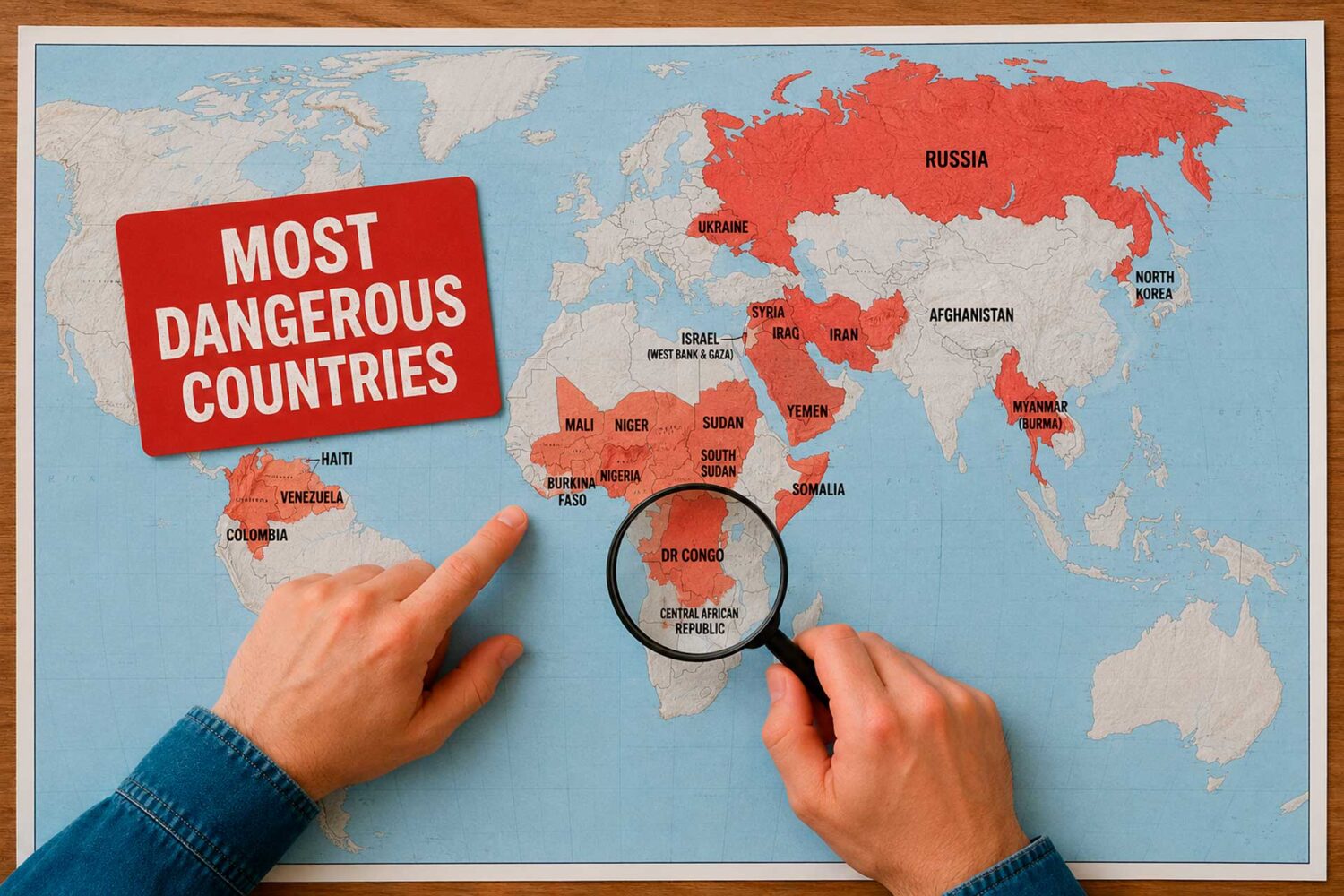
Many of the best countries to raise a family – especially in Europe – are also among the most peaceful according to the Global Peace Index. Iceland has ranked #1 safest worldwide for over a decade. Other notably safe countries include Denmark, Ireland, New Zealand, Austria, and Portugal, all of which appear in the GPI top 10 with very low crime and violence. A peaceful environment means parents don’t have to worry as much about crime or political instability, which is a huge relief. For example, Denmark is one of the few places where people report feeling safe walking alone at night anywhere – even children safely bike to school. Singapore (Asia’s safest) and Japan also boast extremely low crime, though they have other challenges (costs, work culture) for expat families. Generally, the safest countries share traits like social stability, low corruption, effective law enforcement, and low inequality – conditions that also foster a positive environment for raising kids. By contrast, countries with security issues or high violence pose risks to family life. Thus, when choosing a country, many parents prioritize safety first.
Among the top 10 family countries we listed, most are in the top tier of safety. For instance, Austria and New Zealand are both in the GPI top 5, Ireland and Denmark in the top 3 in recent years. Canada is the safest in North America (far safer than the U.S. in GPI ranking) and Australia and Japan are the safest in the Asia-Pacific region. Living in a safe country means children can have more freedom (walking to school, playing outside) without as many worries. It also often correlates with political stability – meaning consistent schooling and services without disruption. In short, the world’s safest countries tend to provide the secure childhood that every parent wants for their kids.
Most Affordable Countries to Raise a Family
Affordability is a major concern for families – housing, food, childcare, education costs all add up. Many of the top-ranking family-friendly countries are high-income nations and can be expensive (e.g. Switzerland, Norway, Denmark have high living costs). However, they often offset costs with public services: free education, healthcare, and generous child benefits mean parents may spend less out-of-pocket on essentials. Still, if you’re looking for lower cost-of-living without sacrificing safety and quality, some countries stand out:
- Portugal – A very popular affordable choice in 2025/2026. Portugal has a cost of living index around 49 (where New York = 100), meaning daily expenses are about half of those in the US or Northern Europe. Housing, groceries, and childcare are relatively cheap. At the same time, Portugal ranks well on safety and healthcare – it’s peaceful and has a national health service. Lisbon and Porto offer modern amenities and international schools at costs far below London or Paris. According to UNICEF, Portugal is also 4th in child well-being among rich countries, showing that affordability doesn’t mean poor outcomes. Families enjoy a warm climate, good work-life balance, and family-centric culture (with strong extended family networks and child-friendly attitudes). Overall, Portugal offers Western European quality at a lower price tag, making it highly attractive for expat families.
- Spain – Spain combines a moderate cost-of-living with high-quality infrastructure. While slightly costlier than Portugal, it’s still cheaper than Northern Europe (Numbeo index ~52). Public schools and healthcare are free, and prescription costs for kids are minimal. Spain also ranks fairly high in child well-being (its kids have excellent health outcomes, though academic performance is middling). Culturally, Spanish life revolves around family – from midday siestas to kid-friendly late-night outings. Working parents benefit from family support and a legally mandated “reduction of working hours” option when children are young. If you avoid the most touristy areas, raising a family in Spain (especially in smaller cities or towns) can be quite affordable and comfortable.
- Eastern Europe (e.g. Poland, Czech Republic, Slovenia) – These countries offer lower living costs while being very safe and having improved services. For example, Poland’s cost-of-living index is around 40, among the lowest in Europe, yet it has modern hospitals and education (literacy 99%, many Polish students excel in math/science). Slovenia is another hidden gem: very affordable, peaceful, and clean, with good schools – it ranks in the top 15 of Numbeo’s safety index worldwide. The trade-off is that salaries are also lower locally, but for expats earning remotely or on foreign income, these places can offer a high quality of family life at a fraction of the cost. Many Eastern European countries also have lengthy parental leaves and cash allowances for children (a legacy of pro-family policies). If you don’t mind learning a new language, these countries can be a smart choice for raising kids on a budget.
- Latin America (Costa Rica) – While most Latin American countries struggle with safety, Costa Rica is an exception often cited for family relocation. It has a stable democracy, no army, and an emphasis on education and health. Costs are much lower than in the U.S./Europe for housing and food. Private bilingual schools and healthcare in Costa Rica’s expat communities (e.g. in the Central Valley) are relatively affordable. However, keep in mind the local salaries are low and public schools/hospitals, while free, may not meet the standards of the developed world. Costa Rica ranked around 31st in UNICEF’s well-being (the highest in Latin America), showing it leads its region but still lags behind Europe. It can be a good affordable option if safety is managed (petty crime exists) and if you leverage private services for quality.
Within expensive countries, find affordability: Even in pricier countries like Canada or Australia, families can find more affordable lifestyles by choosing mid-sized cities or suburbs. For instance, in Canada, living in Quebec or smaller cities (like Halifax or Winnipeg) offers cheaper housing than Toronto/Vancouver, yet with the same universal services. Similarly, in the U.S. (though not a top-ranked country for families overall), certain states or cities are far more affordable and family-friendly than others.
In summary, the most affordable family destinations are often outside the absolute “top 5” list, but they still provide a balance of safety and services. Countries like Portugal, Spain, and Slovenia show that you don’t need to be wealthy to raise a family with a high quality of life – these societies prioritize family welfare and keep costs manageable. Always consider the full picture: a country with higher taxes/costs might give back more (in healthcare, education, child benefits), whereas a low-cost country might require paying privately for certain needs. The goal is to find a place where your income comfortably covers the family’s needs and where public support fills the gaps.

Best Work-Life Balance & Parental Support
One of the hallmarks of a family-friendly country is how well parents can balance work and family time. Work-life balance involves reasonable working hours, flexible schedules, ample vacation, and supportive workplace cultures. This directly impacts how much time parents can spend with their kids. In 2025, studies show European countries dominate work-life balance rankings: a Remitly survey of workers found Finland and Denmark #1 and #2 in work-life quality, with the shortest workdays and highest satisfaction. The OECD also notes that Italy, Denmark, Norway, Spain, and the Netherlands have the lowest rates of overworked employees (only ~2–3% working 50+ hours/week, versus 10%+ in the US).
Top countries for families tend to ensure parents aren’t chained to their desks. For example, Denmark’s 37-hour average workweek and flexible hours allow many Danish parents to pick up kids by 3-4pm and enjoy family dinner at home. Netherlands is famous for its “part-time culture” – many Dutch parents (especially mothers) deliberately work four days or shorter hours, balancing career and family. Germany has laws like “Kindergeld” (child allowance) and encourages a healthy work-life mix with generous vacation (about 30 days annually) and standard 38-hour weeks. Even France implemented a 35-hour workweek law and protects leisure time (e.g. the “right to disconnect” from work emails after hours).
Another critical factor is parental leave and childcare support, as these enable parents (especially mothers) to remain in the workforce without sacrificing family life. The Nordic countries set the gold standard here: Sweden’s 480 days leave and Norway’s 49+ weeks give both parents time to bond with newborns. Finland and Denmark likewise offer nearly a year or more of leave, with a portion reserved for each parent to encourage fathers’ involvement. This not only benefits child development but also promotes gender equality at home and work. Beyond infancy, affordable daycare is essential – places like France (crèche system), Belgium, and the Nordics have extensive public daycare so parents can return to work knowing their kids are in good hands.
Vacation and holidays also play a role. European families typically enjoy 4 to 6 weeks of paid vacation each year, plus paid public holidays – plenty of time for family trips and rest. This contrasts with the U.S., which has no federal paid vacation mandate (many Americans get only ~2 weeks off, contributing to higher stress). The EU Work-Life Balance Directive (effective 2022) even set new minimums for parental leave, paternity leave, and flexible working arrangements for parents across Europe, reflecting a policy commitment to family life.
Work-life balance isn’t just about policies – it’s cultural too. Countries like Australia and New Zealand emphasize leaving work on time and enjoying evening sports or barbecues with family. In Canada, many offices support “Summer Friday” early closings and generous maternal leave. Japan and South Korea, by contrast, have historically long working hours which can strain family time (though both are trying to improve).
To sum up, the best countries for work-life balance (Finland, Denmark, Netherlands, etc.) make it possible to have a successful career and be present for your children’s milestones. They recognize that happy parents raise happy kids, and that flexible, rested workers are more productive. If prioritizing family time is important to you, look for countries where overtime is rare, vacations are long, and parental leave is not just a perk but a right.
Education and Healthcare Excellence
Families universally prioritize education and healthcare for their children. Top family-friendly countries invariably have strong public education systems and guaranteed healthcare access.
Education
The quality of schooling can shape a child’s future. In international assessments (like OECD’s PISA exams), countries such as Finland, Canada, South Korea, Estonia, and Japan frequently excel in reading, math, and science. Many of those also rank well for raising families. Finland’s approach to education – less standardized testing, high teacher qualifications, equal funding – yields great results and happy students, making it a model that others study. Canada is among the top performers in reading and science in the OECD, which means expat kids or locals alike get a strong education without needing private school. Estonia (though not on our top 10 list, it’s notable) has one of the best school systems in Europe at low cost, which helped it rank highly in child well-being metrics.
Nordic countries emphasize not only academics but also well-being and life skills in school. For example, Denmark and Sweden incorporate play and creativity, and tend to have smaller homework loads in primary years, reducing stress. Netherlands is known for having some of the happiest children – Dutch schools combine solid academics with lots of sports, arts, and free time (their school days are often shorter especially for young kids).
Moreover, higher education and college affordability matter as kids grow. In countries like Germany, France, Norway, Finland, higher education is free or very low-cost at public universities, even for international programs. This means parents don’t need to save hundreds of thousands for college – a huge financial relief. Canada and Australia have excellent universities, though they do charge tuition (often lower than U.S. private colleges, and with more subsidies for residents). If you plan to stay long-term, thinking ahead to university can be wise.
Healthcare
All of our top 10 countries guarantee universal healthcare for residents. This is a game-changer for families – no worrying about uninsured bills or whether you can afford a doctor visit. In countries like UK, Canada, Australia, healthcare is tax-funded and mostly free at point of use. In Germany, France, Switzerland, it’s a mix of public insurance and private providers, but essentially every child can see a doctor and get hospital care without financial strain. Preventive care (vaccinations, check-ups) tends to be emphasized. For instance, France has an extensive system of prenatal and infant healthcare visits covered by insurance, contributing to low infant mortality.
The quality of care is also high: according to the OECD Health Index and other measures, countries like Switzerland, Norway, Australia have some of the best healthcare outcomes globally (long life expectancy, low child mortality). Japan and Singapore likewise excel in health outcomes (though their overall “family friendliness” in other categories may vary).
Mental healthcare and maternal health are part of the equation too. UK and Scandinavia have good support for postnatal depression, etc., whereas some countries might not. It’s worth noting U.S. News “Health Care” rankings and the WHO UHC (Universal Health Coverage) index often put European and developed Asian countries at the top.
In essence, when raising a family abroad, you’ll want the peace of mind that if your child falls ill, you can easily access a pediatrician or specialist without red tape or huge cost. All the countries we’ve highlighted ensure that. Emergencies like a broken arm from the playground, or chronic conditions like asthma or autism, can be managed within strong healthcare systems that support children’s needs (often with pecialized clinics or early interventions available).
Summary of Education & Health: Look for countries that invest in public schools and healthcare. These are the places where your taxes visibly benefit your family. It’s not a coincidence that the countries rated best for families have near 100% literacy, high PISA scores, and 100% health insurance coverage. They view education and health as rights, not privileges, which means every child – including yours – can develop to their full potential.
If you’re considering moving to a country with strong education and healthcare systems, it’s important to choose the right destination and immigration pathway. Leave a request for a consultation to get personalized guidance and plan your family’s future with confidence.
Schedule a free consultation and get detailed information from Unioncitizenship lawyers. Start the process today!

How to Choose the Right Country for Your Family
How to decide which country is best for your family? It depends on your priorities and circumstances. Here are a few steps and factors to consider:
- List your must-haves: Is it safety above all? Better education? Lower cost of living? Proximity to family? Language? Rank the factors that matter to you. For example, some parents might prioritize a country with English-speaking schools, while others might value affordable childcare more. This will narrow down the choices.
- Research visa/residency options: The best country in theory won’t help if you can’t legally move there. Countries like Canada, Australia, and New Zealand have immigration programs for skilled workers. EU countries offer visas but can be tougher unless you have EU citizenship or a job offer. Some countries have special programs (Portugal’s Golden Visa, for instance, or remote worker visas). Make sure to consider where you’re eligible to live long-term.
- Consider climate and culture: A Nordic country offers amazing benefits, but the dark winters and new language might be challenging for some. A safe, sunny country like Spain or Portugal might appeal if weather and outdoor lifestyle are important. Think about how your family will adapt to the local culture (food, traditions, schooling style). Perhaps even plan a trip first to get a feel.
- Look at specific city/region: Often, the city matters as much as the country. Large cities have more international schools and job opportunities but also higher costs. Smaller towns are safer and cheaper but might have fewer amenities. For example, in France, Paris life vs. provincial life can be very different for a family. Research child-friendly cities (e.g., Helsinki, Copenhagen, Vancouver, Melbourne, Vienna, Zurich consistently rank as family-friendly cities).
- Calculate the finances: Check if one of the parents’ job can be transferred or if you need local employment. Salaries versus cost-of-living vary. Some countries might have lower salaries but also much lower expenses. Ensure you understand tax rates and what you get in return (higher taxes in Europe fund a lot of free services that you’d otherwise pay out-of-pocket elsewhere).
- Community and support: If possible, connect with other expat or local families in the destination country (via online forums or social media). They can give insight into everyday life, schools, healthcare navigation, etc. It helps to know you’ll have a support network when you arrive.
Ultimately, data and rankings can guide you (hence this article), but the fit for your family is personal. Many people choose a country that might not be #1 on paper, but is the best for their careers, culture, or extended family ties. The good news is that in 2026, numerous countries around the world are focusing on improving conditions for families, so you have many viable choices. Consider all these factors, visit if you can, and trust your instincts. With preparation, you can find a place where your family will truly thrive.
Conclusion: Thriving as a Family in 2026
In 2026, families have more options than ever to live abroad or relocate in search of a better life. The best countries to raise a family are those that provide a safe childhood, quality education, good health, economic security, and precious time with loved ones. The Nordic nations (Sweden, Denmark, Norway, Finland) clearly stand out, achieving all these with their comprehensive welfare models. Other countries like the Netherlands, Switzerland, Canada, Australia, New Zealand, and Austria also demonstrate that through a mix of public support and cultural values, families can truly thrive. These countries differ in climate and culture – from the fjords of Norway to the beaches of Australia – but they share a common commitment: investing in the next generation.
As you consider the best place for your family, think about what matters most to you: safety, affordability, cultural fit, language, proximity to relatives, etc. The top-ranked countries offer well-rounded benefits, but each has its unique flavor. By prioritizing evidence-based factors like those discussed (peace indexes, education outcomes, health systems, and family policies), this guide helps ensure your decision is backed by data and real-world results. In the end, “best” is personal – but generally, you won’t go wrong choosing a country that scores high on safety, education, healthcare, and happiness. Here’s to finding the place where your family can be happiest and healthiest in the years ahead. If you want to make the right choice and plan your move with confidence, it’s worth getting expert advice tailored to your situation. Leave a request for a consultation to explore the best countries and immigration pathways for your family.

Find out details about obtaining an EU passport at a free consultation
Fill out a simple form and an immigration lawyer will contact you shortly.