


Top 10 Best English-Speaking Countries to Live and Move in 2026
- What Does “English-Speaking” Mean?
- How We Ranked the Best English-Speaking Countries to Live
- Top 10 Best Countries for English speakers in 2026
- How to choose which country is right for you?
Moving to a country where English is widely spoken can significantly ease the transition for global expats. No struggling with language barriers – from day one, you can navigate daily life, work, and socialize in a familiar language. In 2026, many countries either have English as their official language or boast a population with very high English proficiency, making them ideal for English-speaking expatriates. This article covers both native English-speaking countries (where English is the primary language) and non-native countries where English is widely used. We’ll look at each country’s key factors like cost of living, healthcare system, safety, English usage, and immigration options. We’ll also provide pros and cons and lifestyle tips for different types of expats (families, retirees, digital nomads, etc.), plus FAQs about living abroad in an English-speaking environment.
Whether you’re seeking career opportunities in a major global city, a laid-back retirement by the beach, or an adventure in a culturally rich nation that still offers English convenience, this guide will help you compare the best English-speaking countries to live in 2026. Let’s dive into the top destinations, one by one.
What Does “English-Speaking” Mean?
An English-speaking country can refer to any nation where English plays a prominent role in daily life. This usually falls into two categories: countries that officially designate English as an official language, and those that are “English-friendly” due to high proficiency among the population. Both types attract expats because they make it easier to live and work without a language barrier.
Official English-Speaking Countries
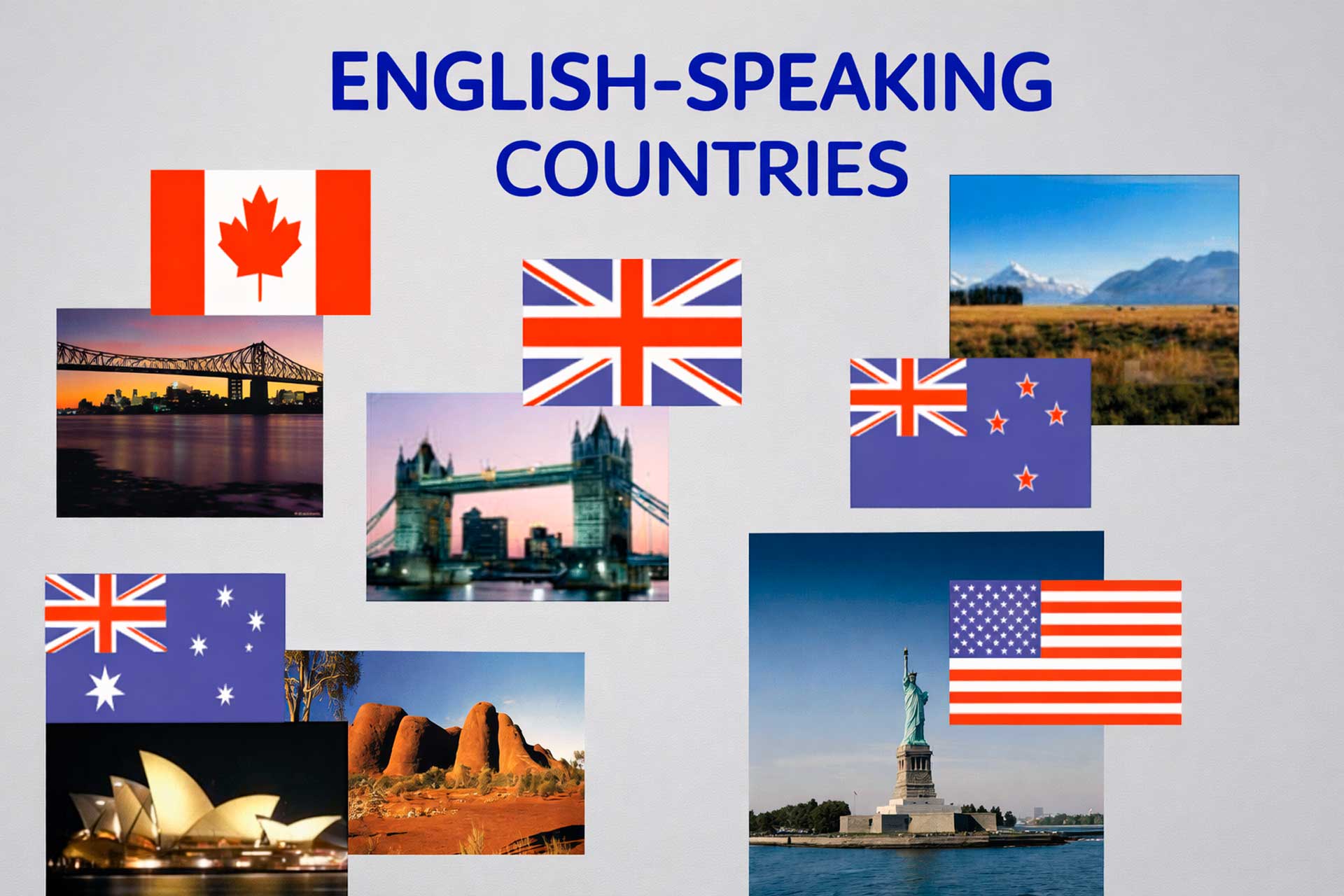
Official English-speaking countries are nations that have legally adopted English as an official language (de jure or de facto). In these countries, English is used in government, courts, schools, and public signage. They include the core Anglosphere (like the United Kingdom, United States, Canada, Australia, and New Zealand) as well as many former British colonies in Africa and Asia. For example, English is an official language in countries ranging from Australia and Kenya to India and Nigeria, spanning every continent. Notably, even the United States formally designated English as an official language in 2025. In these nations, a large portion of the population grows up speaking English natively or bilingually, and the language holds legal status at the national level.
English-Friendly Countries (High English Proficiency)
English-friendly countries are those where English isn’t an official language, yet a significant share of people speak it fluently as a second language. These nations often rank highly in education-driven English proficiency indexes. For instance, Sweden has nearly 90% English fluency among its population despite Swedish being the official language. Similarly, the Netherlands, Denmark, Norway, and Finland have English proficiency rates so high that daily life for expats can be nearly as convenient as in an Anglophone country. In these countries, English is taught in schools from an early age and used widely in business, tourism, and higher education, making them very accommodating for English-speaking foreigners.
If you’re planning to relocate to an English-friendly country, choosing the right immigration pathway can make your transition much smoother. Leave a request for a consultation to get personalized advice and find the best option for your move.
Schedule a free consultation and get detailed information from Unioncitizenship lawyers. Start the process today!

How We Ranked the Best English-Speaking Countries to Live
When evaluating the best English-speaking countries to live in 2026, we considered several key factors to ensure a holistic, expat-focused ranking. Our criteria include economic and lifestyle metrics, safety and healthcare, and of course the prevalence of English in daily life. Below are the ranking criteria we used:
- Cost of living. We compared how affordable each country is for everyday expenses like housing, food, transportation, and taxes. Countries where an average expat’s income can comfortably cover monthly costs ranked higher in affordability.
- Quality of life. Overall living standards were critical. We looked at factors such as infrastructure, environmental quality, political stability, and personal freedoms to gauge the quality of life in each country. High scores in global quality-of-life indexes boosted a country’s ranking.
- Access to quality healthcare and insurance was weighed for each location. We favored countries with excellent healthcare systems – whether public, private, or a mix – and easy accessibility of medical services for residents (including expats).
- Personal safety and security are paramount for anyone relocating. We examined crime rates, law and order, and political stability. Countries with low crime and stable, secure environments earned higher marks for safety.
- Job opportunities. We factored in the strength of the job market and economic opportunities. Countries with growing economies or plentiful jobs (especially for English-speaking professionals) scored well, whereas locations with limited career prospects ranked lower.
- Visa & residency options. How easy is it to move there? We assessed the availability of visas or residency programs for expats – such as work permits, skilled migration visas, investment or “Golden Visa” programs, retirement visas, and digital nomad visas. User-friendly immigration policies improved a country’s ranking.
- English usage in daily life. Since this list is about English-speaking destinations, we considered how widely English is used day-to-day. Countries where English is either an official language or very commonly spoken (in business, education, and public life) got a significant advantage, as this makes integration much easier for expats
Best English-Speaking Countries Compared
To help you decide, here’s a comparison of top English-speaking countries to live in, summarizing their English status, general cost of living, and which types of expats they suit best. These popular destinations – from traditional Anglophone nations to high English-proficiency countries – offer a range of lifestyles and opportunities for global residents:
| Country | English Status | Cost of Living | Best For |
|---|---|---|---|
| Netherlands | Widely spoken (not official) | High | expats, families |
| Sweden | Widely spoken (not official) | High | expats, families |
| Denmark | Widely spoken (not official) | High | expats, families |
| Norway | Widely spoken (not official) | High | expats, families |
| Finland | Widely spoken (not official) | High | expats, families |
| Belgium | Widely spoken (not official) | Medium | expats, families |
| Singapore | Official (English is one of official languages) | High | expats, families |
| Portugal | Widely spoken (English-proficient) | Low | retirees, remote workers |
| India | Official (English co-official) | Low | expats, remote workers |
| Philippines | Official (English co-official) | Low | retirees, remote workers |
| Malaysia | Widely spoken (high proficiency) | Low | retirees, remote workers |
| Australia | Official (English primary) | High | expats, families |
| Canada | Official (English primary*) | Medium | expats, families |
| New Zealand | Official (English primary) | Medium | expats, families |
| United Kingdom | Official (English primary) | High | expats, families |
| Ireland | Official (English primary) | Medium | expats, retirees |
As shown above, some of the best countries for English-speaking expats include both native English countries (like Australia, Canada, the UK, and Ireland) and nations with widespread English fluency (like the Netherlands or Singapore). Cost of living varies widely – from low-cost destinations ideal for retirees or remote workers (e.g. Portugal, Malaysia, the Philippines) to high-cost countries with top-notch infrastructure suited for professionals and families (e.g. Norway, Singapore, UK). By considering your budget and lifestyle needs, you can pick the English-speaking country that best matches your situation, whether you’re seeking a new career opportunity, a family-friendly environment, or a comfortable place to retire abroad.
Top 10 Best Countries for English speakers in 2026
Choosing where to live abroad is easier when language is not a barrier. In 2026, the best English-speaking countries to live and move to offer a combination of high quality of life, strong healthcare systems, job and visa opportunities, and widespread use of English in everyday life.
This list includes both countries where English is an official language and English-friendly destinations with very high English proficiency, making them ideal for global expats, families, remote workers, and retirees. Each country below is evaluated based on cost of living, safety, healthcare, job prospects, residency options, and how easily you can live using English on a daily basis.
Use this ranking to quickly identify which English-speaking country best fits your lifestyle goals—whether you are planning a permanent move, a career-driven relocation, or a long-term stay abroad.
United States
The United States is a vast country offering unmatched diversity – from the bustling English-speaking metropolises of New York, Los Angeles, and Chicago to small towns and scenic rural areas. As an English speaker, you’ll have no language barriers in daily life; all business, education, and government services operate in English. The U.S. economy is the world’s largest, providing abundant job opportunities across industries and some of the highest salaries globally for skilled workers. American culture is diverse and influential, so expats often find communities from all backgrounds, making it easier to adapt socially.
- Language: English (official at federal level de facto, no official language nationally but English is dominant); 99% of residents speak English or are learning it.
- Cost of Living: High – Major cities like New York or San Francisco are among the world’s most expensive; a family of four’s expenses in NYC can exceed $5,000/month (excluding rent). Cheaper options exist in smaller cities or suburbs, but overall costs (especially healthcare) are high.
- Healthcare: Private, costly – No universal healthcare; quality is world-class for those with good insurance, but the U.S. spends ~40% more per person on healthcare than any other country. Expats often need private insurance (which can be expensive).
- Safety: Moderate – Crime varies by area. The U.S. faces higher violent crime and unique issues (e.g. gun violence) compared to other developed nations. It ranked 131st in the Global Peace Index 2023, reflecting these safety challenges.
- Visa & Immigration: Challenging – The U.S. offers work visas (e.g. H-1B for skilled workers, with annual caps), family-sponsored green cards, an investor visa (EB-5), and a diversity lottery. Immigration can be complex and competitive. Permanent residency (Green Card) is coveted but requires sponsorship, lottery luck, or significant investment. Processing times are long, and there is no straightforward “expat visa” for retirees or remote workers.
Canada
Canada often tops lists of best countries for quality of life, and for good reason. As an English-speaking expat, you’ll find Canada extremely accessible and friendly. English is the dominant language across most of the country (except in parts of Quebec and some areas of New Brunswick), and even there you can get by in English. Canadians are known for being polite and welcoming, and the country prides itself on multiculturalism – major cities like Toronto, Vancouver, Calgary, and Ottawa have large expat and immigrant communities. Culturally, Canada offers a mix of North American convenience and infrastructure with a European-style emphasis on community and social welfare. You’ll enjoy modern, clean cities, stunning nature (from the Rocky Mountains to Atlantic coastlines), and a generally peaceful, orderly society.
- Language: English and French (both official, though English is predominant in most provinces). Nearly 85% of Canadians speak English fluently (either as a first or second language). Daily life for an English-speaking expat is seamless, especially outside of French-speaking Québec.
- Cost of Living: Moderate-High – Cheaper than the U.S. on average, but big cities like Toronto and Vancouver have high housing costs. Average monthly expenses for a single person range roughly $2,000–$2,500 not including rent. Overall, expect lower healthcare and education costs than the U.S., but higher taxes.
- Healthcare: Universal – Canada has a publicly funded healthcare system (Medicare) that provides basic coverage for residents. Healthcare quality is high, and it’s free at point of use, but wait times for specialists or non-urgent procedures can be long. Many expats are eligible for provincial health coverage after a waiting period.
- Safety: Very Safe – Canada ranks among the world’s safest nations. It has low crime rates and is politically stable. For instance, Canada is in the top tier of safest countries with a “Low” risk level and high safety index. Its cities consistently score well on safety and quality of life indexes.
- Visa & Immigration: Welcoming – Canada is known for its immigrant-friendly policies. The Express Entry points system actively recruits skilled workers for permanent residency. There are also visa streams for family reunification, provincial nominee programs, investor visas, and a welcoming posture toward refugees and international students. Many expats find it one of the easiest English-speaking countries to immigrate to, especially if you have in-demand skills or education.
United Kingdom
The United Kingdom – comprising England, Scotland, Wales, and Northern Ireland – offers a rich blend of history, culture, and modern urban life. As a native English-speaking country, it’s a top choice for expats who want minimal language barrier but a distinct cultural experience. The UK is known for its cosmopolitan cities (London is a global finance and arts capital), quaint towns and countryside, world-class education (think Oxford, Cambridge), and the cultural comfort of pubs, football (soccer), and a good cup of tea. Despite recent changes with Brexit, the UK remains a hub for international business and retains a diverse population – for example, London’s residents speak over 300 languages, though English unites everyone.
- Language: English (official). 98% of the population speaks English. While regional accents vary (from the Queen’s English in Oxford to the Scottish brogue), an English-speaking expat can navigate every aspect of life without language issues.
- Cost of Living: High in cities, moderate outside – London is notorious for its high cost of living (especially rent). Major cities like London and Oxford have living costs comparable to New York. An average monthly cost for a single in London is around £800–£1,000 for rent of a room plus £800+ for expenses. Other cities (Manchester, Birmingham, Glasgow) and towns are more affordable. Overall UK monthly living costs might range ~$2,100–$2,600 for a single, with regional variation.
- Healthcare: Universal (NHS) – The UK’s National Health Service (NHS) provides free healthcare at point of use for residents. Expats on work visas pay a health surcharge to access it. The NHS covers general treatment and emergency care well, though it has some capacity strains (expect wait times for non-urgent appointments). Quality of care is good and there’s also a private sector if you choose.
- Safety: High – The UK is generally very safe. Violent crime rates are low and gun violence is extremely rare (firearms are tightly controlled). The Global Peace Index places the UK in a “low risk” category with a stable society (UK was ranked 18th safest by one index). Petty crime like pickpocketing can happen in tourist areas, but overall, expats feel secure.
- Visa & Immigration: Structured but stricter post-Brexit – The UK uses a points-based immigration system. For non-UK/non-Irish citizens, common visas include the Skilled Worker Visa (requires a job offer and sponsorship), Global Talent Visa (for highly skilled in certain fields), Student Visa, and various family visas. Brexit ended free movement with the EU, so EU nationals now also need visas. The UK has eliminated some easy routes (e.g., no more Tier 1 investor visa), making it moderately challenging unless you have a job lined up. However, there are new options like the High Potential Individual visa for recent top global graduates, and the Innovator Founder visa for entrepreneurs.
Ireland
Ireland, known as the Emerald Isle, offers an enchanting mix of lush landscapes, modern innovation, and deep cultural heritage. It’s an English-speaking country (with that lovely Irish accent!) that has become a tech and finance hub in recent decades – Dublin hosts many European headquarters for companies like Google, Facebook (Meta), Apple (in Cork), etc. For expats, Ireland provides the comfort of English in daily life plus the warm, friendly nature the Irish are famous for. Pubs, live music, literature, and community are big parts of life. Outside of work, you can explore stunning scenery – dramatic coasts, green countryside, ancient castles – all within a few hours’ drive. Ireland is also a gateway to Europe, and as a continuing EU member, it retains strong links to the continent (important post-Brexit, as some companies and expats choose Ireland as an English-speaking base in the EU).
- Language: English (official, along with Irish Gaelic). English is the everyday language for the vast majority; over 98% speak English fluently, so expats face no language barrier. (Irish is spoken natively by a small percentage and on signs, but you can get by entirely in English.)
- Cost of Living: High (especially Dublin) – Ireland has become pricey in recent years. Dublin, the capital, has rents on par with London or New York for desirable areas. A one-bedroom in Dublin can be €1,500+ per month. Overall monthly costs for a single might be around $2,300–$2,800. Smaller cities (Cork, Galway, Limerick) and rural areas are more affordable but still not “cheap” by global standards.
- Healthcare: Public-private mix – Ireland has public healthcare for residents (with small fees for some services) and optional private insurance for faster access. The public system is good but can be stretched (wait times can occur). Many expats (and locals) opt for private health insurance to supplement. EU citizens can use EHIC coverage. English-speaking doctors and high-quality care are available, especially in Dublin.
- Safety: Very Safe – Ireland is one of the world’s safest countries. It ranks in the top 10 globally for peace and stability. Violent crime is very low; most of Ireland’s safety issues might involve petty theft or the occasional rowdy pub incident. The country is politically stable and welcoming.
- Visa & Immigration: Fairly Accessible (for skilled workers and EU citizens) – As an EU member (in 2026), Ireland allows EU/EEA citizens to live and work freely. For non-EU expats, there are work permit schemes such as the Critical Skills Employment Permit (for in-demand professions) and the General Employment Permit, among others. Ireland also offers a Working Holiday Visa for youth from certain countries and the Irish Start-up Entrepreneur Programme for investors. Overall, Ireland actively courts tech workers and professionals, but it doesn’t have a broad points system like Canada – typically you need a job offer or to qualify via investment/enterprise.
Australia
Australia frequently ranks as one of the best countries to live in thanks to its high quality of life, beautiful environment, and stable economy. It’s a vast country (nearly a continent) with only ~26 million people, meaning plenty of space and diverse landscapes – from stunning beaches and coral reefs to outback deserts and cosmopolitan cities. For an English-speaking expat, Australia offers the comfort of language (just mind the Aussie slang like “G’day” and “no worries”) and a very multicultural society (especially in cities). Sydney is a global city known for its iconic Opera House and harbor; Melbourne is renowned for arts, coffee, and culture; Brisbane, Perth, Adelaide, and others each have their own charms. The lifestyle in Australia is often described as outdoorsy and relaxed – think weekend barbecues, beach outings, and sports (Aussies love their sports). Yet, it’s also highly developed: infrastructure is excellent, schools and universities are top-notch, and it’s a leading economy in the Asia-Pacific region.
- Language: English (official de facto, with no official de jure language but English is universally spoken). ~97% of Australians speak English at home or fluently. Some slang and the Aussie accent might take getting used to, but communication is easy for any English speaker.
- Cost of Living: High – Major cities like Sydney and Melbourne rank among the world’s most expensive. Expect monthly living costs around $2,500–$3,200 for a single. Housing is the biggest expense: Sydney and Melbourne have very high rents/property prices. Other cities (Brisbane, Perth, Adelaide) are slightly cheaper. Groceries and dining out are moderate to high, but wages in Australia are also high.
- Healthcare: Universal (Medicare) – Australia offers a public healthcare system (Medicare) that covers most essential medical services for citizens and permanent residents. It’s high-quality and either free or low-cost at point of care. Expats on certain visas may need private insurance initially (and many Aussies carry private insurance for extra services), but overall healthcare is excellent. Australia often ranks highly for healthcare outcomes.
- Safety: Very Safe – Australia is one of the safest countries globally, with low crime rates and a high standard of living. It consistently appears near the top of global safety indexes. Day-to-day life is secure; however, do respect nature – some wildlife (snakes, spiders, jellyfish) are famously dangerous, but actual incidents are rare and manageable with precautions.
- Visa & Immigration: Skilled-friendly (Points System) – Australia has a well-established points-based immigration system targeting skilled workers. Visas like the Skilled Independent (subclass 189) and Skilled Nominated (190) let qualified professionals move without a prior job offer if they meet points criteria (age, skills, English, etc.). There are also employer-sponsored visas, working holiday visas (for under 35), and special categories. Australia is known for being welcoming to immigrants, but the process is rigorous in terms of documentation and quotas.

New Zealand
New Zealand is often hailed as a paradise for those seeking natural beauty, tranquility, and a high quality of life. It offers an English-speaking environment in a country known for its stunning landscapes – from the snow-capped mountains and fjords of the South Island to the green rolling hills and beaches of the North Island. It’s no surprise it’s a favorite backdrop for movies (Lord of the Rings, anyone?). For expats, NZ offers a welcoming, laid-back lifestyle. The population is just about 5 million, so everything is a bit more intimate and community-oriented. Auckland is the largest city (around 1.6 million) – a multicultural hub with a temperate climate and a beautiful harbor. Wellington, the capital, has a vibrant arts scene and cafés, nestled between hills and a lovely coastline. Other cities like Christchurch, Queenstown, Dunedin, Hamilton have their own character. Culturally, Kiwis (New Zealanders) are friendly, outdoorsy, and value work-life balance. You’ll quickly hear the phrase “Sweet as!” (meaning everything’s good). Māori culture is an integral part of NZ’s identity, and you’ll see its influence everywhere (from haka performances to Māori names for places). English speakers adapt easily – driving is on the left, but beyond that and some accent quirks, life is straightforward for an English-speaking expat.
- Language: English (official, along with Māori and NZ Sign Language). Nearly everyone speaks English fluently in New Zealand (with a charming Kiwi accent). Māori words are integrated in everyday language (for example, “Kia ora” for hello), but English is dominant in all business and daily life.
- Cost of Living: Moderate-High – New Zealand’s cost of living is high relative to its size, due to remote location and smaller economy. Auckland and Wellington have costs similar to mid-sized European cities. Monthly living expenses for a single are roughly $2,300–$2,800. Housing is a major expense: Auckland has seen big price increases; renting a one-bedroom can be NZ$1,800+ ($1,100 USD) per month. Outside major cities, costs drop, but goods (especially imports) remain pricey.
- Healthcare: Mixed public-private – New Zealand has a public healthcare system that heavily subsidizes hospital and emergency care (free or low cost for residents). GP visits and prescriptions have some fees, but are subsidized. The quality of care is excellent and English-speaking expats will find it easy to navigate. Many Kiwis also buy private insurance for faster elective treatment, but it’s optional. Overall, healthcare in NZ is high-quality and accessible, though rural areas may have fewer specialists.
- Safety: Extremely Safe – New Zealand is consistently ranked among the world’s most peaceful, safe countries. Crime rates are low; it’s a very stable and friendly society. One of the biggest “hazards” might simply be the rugged natural terrain when adventuring (NZ is the adventure sports capital), but even that is well-managed with good safety standards.
- Visa & Immigration: Skilled migrant points system – New Zealand, like its neighbor, has a points-based Skilled Migrant Category (SMC) for those with in-demand skills. A job offer in NZ significantly boosts your chances, but you can also apply without one if qualified. There are also work-to-residence visas, working holiday visas (for youth of many countries), and investor/entrepreneur visas. NZ seeks migrants in sectors like IT, engineering, healthcare, and trades. The process is a bit smaller-scale than Australia’s, but similarly structured.
Netherlands
The Netherlands, often known as Holland (though that technically refers to two provinces), is a highly developed, progressive country in Western Europe. For English-speaking expats, it’s one of the easiest places to adapt without speaking the local language. You’ll find that businesses, universities, and even government services (to a degree) operate in English. The Dutch are typically direct, friendly, and internationally minded. The country is famous for its bicycle culture – flat terrain and dedicated bike lanes mean many residents commute by bike (even the Prime Minister bikes to work!). Life in the Netherlands offers a mix of historic charm and modern convenience: think picturesque canals, centuries-old architecture, and also efficient public transport, cutting-edge design and technology scenes. Cities like Amsterdam are vibrant and multicultural, with a large expat community and a very cosmopolitan feel. Yet, the country is small, so a short train ride can take you to quaint villages or tulip fields in the countryside. Workplaces are often quite international, especially in tech, finance, and creative industries. Dutch work culture values work-life balance and tends to be consensus-driven. And of course, the Netherlands is known for its liberal social policies (legalized same-sex marriage first in the world, tolerant attitudes). It’s a place where quality of life is high – good public services, plenty of cultural activities, and Europe at your doorstep for travel.
- Language: Dutch (official), but English proficiency is exceptionally high – about 90% of Dutch people speak English, and often at a near-native level. Many expats live in the Netherlands without learning much Dutch, as you can conduct daily life in English (especially in cities like Amsterdam, Rotterdam, The Hague, Utrecht). The Netherlands consistently ranks #1 in the world for non-native English proficiency.
- Cost of Living: Moderate-High (European standards) – The cost of living is similar to other Northwestern European countries. Amsterdam is the most expensive city (expect high rents, €1,500+ for a one-bedroom in central areas). Overall, monthly costs for a single might be $2,200–$2,500. Other cities are cheaper; for example, living in Eindhoven or Groningen can save money. Groceries, healthcare, and transportation are reasonably priced. Tax rates are relatively high but fund excellent public services.
- Healthcare: Universal via mandatory insurance – The Dutch healthcare system is top-ranked globally. Everyone is required to have health insurance (basic package ~€120/month), and insurers must accept all applicants. The government subsidies ensure coverage is affordable. Care quality is excellent – modern facilities and highly trained English-speaking doctors. General practitioners are the first point of contact (referrals needed for specialists). There can be a straightforward, no-fuss approach to medicine (e.g., not over-prescribing), which some expats note.
- Safety: Very Safe – The Netherlands is a peaceful, well-organized country. Crime rates are low; it’s common to cycle at night safely. It ranked 21st out of 163 on the Global Peace Index recently, indicating a very low crime and high stability environment. Petty theft (like bike theft) is the most common issue – keep that bike locked! Politically stable, with trusted police and rule of law.
- Visa & Immigration: Challenging but possible for skilled workers – As an EU country, EU/EEA citizens can live and work freely. For non-EU, the main path is a Highly Skilled Migrant Visa (requiring a job offer from a recognized employer and a minimum salary ~€5,000/month for over 30s, lower for under 30). There’s also the Orientation Year (zoekjaar) for recent graduates of Dutch universities or top global universities – a 1-year open work visa. Entrepreneurs can apply for a Startup Visa or the Self-Employed visa (if you have a viable business plan with Dutch interest). Dutch immigration is bureaucracy-heavy but efficient; learning some Dutch can help integrate for long-term residency or citizenship (which requires an integration exam).
Portugal
Portugal is a laid-back, sun-soaked country on Europe’s western edge that has become one of the top destinations for English-speaking expats. It offers a rare combination of affordability, safety, mild climate, and high quality of life. English is widely used in expat hubs, making the transition smooth for newcomers. The Portuguese are known for being warm, polite, and welcoming, especially toward foreigners.
Life in Portugal moves at a slower pace compared to Northern Europe. Long lunches, outdoor cafés, and a strong emphasis on family and leisure are part of daily life. The country is famous for its Atlantic coastline, historic cities, colorful tiled buildings, and excellent food (especially seafood and wine). Lisbon and Porto provide vibrant cultural scenes and growing tech and startup communities, while regions like the Algarve attract retirees and remote workers seeking beachside living.
Work culture tends to value balance over hustle, and while salaries are lower than in Northern Europe, the lower cost of living often offsets this. With excellent weather, easy access to the rest of Europe, and a strong expat community, Portugal is an especially attractive choice for remote workers, retirees, and lifestyle-focused expats looking for an English-friendly country with long-term residency options.
- Language: Portuguese (official), but English proficiency is high—especially in major cities and coastal regions. Around 60% of the population speaks English to some degree, with much higher fluency among younger people and in expat-heavy areas. In places like Lisbon, Porto, Cascais, Lagos, and much of the Algarve, it’s entirely possible to manage daily life in English. Many professionals in healthcare, real estate, tourism, and public services speak English, and Portugal consistently ranks among the top European countries for non-native English proficiency. While learning basic Portuguese helps with deeper integration, many expats live comfortably for years with limited language skills.
- Cost of Living: Moderate to Low (Western European standards) – Portugal remains one of the most affordable countries in Western Europe, though costs have risen in recent years. Lisbon and Porto are the most expensive cities, with one-bedroom apartments in central areas often ranging from €1,000–€1,400 per month. Outside these hubs, housing is significantly cheaper—smaller cities and inland regions offer excellent value. A single person can expect average monthly expenses of around $1,700–$2,100. Groceries, dining out, public transport, and utilities are generally affordable. Taxes can be relatively high for residents, but past programs like the Non-Habitual Resident (NHR) regime have made Portugal especially attractive to foreign residents (note: tax rules evolve and should be checked before moving).
- Healthcare: Universal public healthcare with private options – Portugal has a well-regarded public healthcare system (SNS) that residents can access after registering, with very low out-of-pocket costs. Many expats also choose private health insurance, which is affordable by international standards (often €40–€80/month), to access private clinics and English-speaking doctors more quickly. Healthcare quality is solid, particularly in urban areas, and private hospitals in Lisbon and Porto are modern and well equipped. Doctors and medical staff in private facilities commonly speak English, making healthcare relatively stress-free for expats.
- Safety: Very Safe – Portugal is consistently ranked as one of the safest countries in the world. It regularly places in the top 10 of the Global Peace Index, reflecting very low violent crime rates and high political stability. Walking alone at night is generally safe, even in larger cities. Petty crime such as pickpocketing can occur in tourist areas, but serious crime is rare. The country is politically stable, has a strong sense of community, and is known for its calm, relaxed atmosphere.
- Visa & Immigration: Expats-friendly with multiple pathways – Portugal offers some of the most accessible residency options in Europe. EU/EEA citizens can live and work freely. Non-EU citizens have several popular routes, including the D7 visa (for those with passive or remote income), the Digital Nomad Visa (for remote workers and freelancers), and work visas sponsored by Portuguese employers. Portugal also previously offered a Golden Visa program (now more limited), and long-term residents can apply for permanent residency or citizenship after five years. Portuguese immigration processes can be paperwork-heavy, but they are generally transparent, and Portugal is considered one of the easier EU countries for legal relocation.
Singapore
Singapore is a modern, global city-state in Southeast Asia that serves as a major hub for finance, technology, trade, and innovation. For English-speaking expats, it is one of the most seamless relocation destinations in the world. The city is highly international, with a large expat population and a multicultural society where diversity is the norm.
Life in Singapore is fast-paced, efficient, and highly convenient. The city is famous for its skyline, green urban planning, and exceptional public transport. Despite its density, Singapore offers a high quality of life, with excellent infrastructure, clean streets, and easy access to nature through parks and nearby islands. Work culture is professional and competitive, particularly in finance, tech, and corporate sectors, but salaries are among the highest in Asia.
Socially, Singapore is safe, orderly, and culturally rich, blending Chinese, Malay, Indian, and Western influences. Food is a major highlight, from world-class fine dining to affordable hawker stalls. With its strong economy, low taxes, top-tier healthcare, and full English-language environment, Singapore is especially attractive for career-focused expats, entrepreneurs, and high-earning professionals seeking stability and opportunity in Asia.
- Language: English (official) – English is one of Singapore’s four official languages and the primary language of government, business, education, and everyday communication. It is the main working language and the default language between people of different ethnic backgrounds. Nearly everyone in Singapore speaks English fluently, often alongside Mandarin, Malay, or Tamil. Expats can live their entire daily lives in English without any language barriers—from dealing with government offices and healthcare to socializing and working. Singapore consistently ranks among the easiest countries in the world for English-speaking expats to integrate.
- Cost of Living: High – Singapore is one of the most expensive cities and countries globally, particularly for housing. Rent is the largest expense, with a one-bedroom apartment in central areas often costing SGD 3,000–4,000+ per month. However, other everyday costs can be surprisingly reasonable: public transportation is affordable and efficient, local food at hawker centers is inexpensive, and utilities are well-managed. A single expat’s monthly expenses typically range from $3,000–$4,000+, depending heavily on housing choices. Taxes are relatively low compared to most Western countries, which helps offset the high cost of living for professionals with strong incomes.
- Healthcare: World-class, high-quality system – Singapore’s healthcare system is consistently ranked among the best in the world. It combines public and private healthcare, with modern hospitals, advanced technology, and highly trained medical professionals. English is the standard language used by doctors and medical staff. While healthcare is not free, it is efficient and transparent, and many employers provide private health insurance. Expats often find healthcare costs reasonable for the level of care received, especially compared to countries like the United States.
- Safety: Extremely Safe – Singapore is one of the safest countries in the world, with very low crime rates and strict law enforcement. Violent crime is extremely rare, and it’s common for people to walk alone at night without concern. The country ranks highly in global safety and security indexes and is known for its cleanliness, order, and rule of law. Laws are strictly enforced, and penalties can be severe, which contributes to the overall sense of security and public trust.
- Visa & Immigration: Structured and employment-focused – Singapore has a highly organized but selective immigration system. Most expats enter on an Employment Pass (EP), which requires a job offer and a minimum salary threshold (which increases with age and experience). There are also S Passes for mid-skilled workers and EntrePass options for entrepreneurs starting innovative businesses. Permanent residency is possible but competitive and typically requires several years of employment and integration. While Singapore is not the easiest country to immigrate to, it is very transparent, fast, and predictable for skilled professionals.
United Arab Emirates (UAE)
The United Arab Emirates is a dynamic Middle Eastern country known for its rapid development, modern infrastructure, and global business hubs. Cities like Dubai and Abu Dhabi are among the most international in the world, with expats making up the majority of the population. For English-speaking expats, the UAE offers one of the smoothest transitions anywhere, as English is effectively the country’s lingua franca.
Life in the UAE is modern, fast-paced, and highly service-oriented. The country is famous for its skyscrapers, luxury lifestyle, shopping, and ambitious development projects, but it also offers quieter residential communities, beaches, and desert landscapes. Work culture is professional and results-driven, particularly in industries such as finance, technology, construction, energy, and logistics. Salaries are competitive, and the absence of income tax is a major draw.
Culturally, the UAE blends traditional Arab customs with a very international outlook. Expats are expected to respect local laws and traditions, but daily life is generally liberal and accommodating, especially in major cities. With its strong economy, tax advantages, world-class infrastructure, and full English-language environment, the UAE is especially attractive for career-driven expats, entrepreneurs, investors, and remote professionals seeking financial opportunity and a high standard of living.
- Language: Arabic (official), but English is widely spoken and functions as the main working language. While Arabic is the official language, English is the dominant language of business, education, healthcare, and everyday life – especially in cities like Dubai and Abu Dhabi. The vast majority of the population, including government staff, service workers, and professionals, speaks English fluently due to the UAE’s large expat majority. Many residents live for years in the UAE without learning Arabic, making it one of the easiest countries in the world for English-speaking expats to adapt.
- Cost of Living: Medium to High (city-dependent) – The cost of living in the UAE varies significantly by city and lifestyle. Dubai and Abu Dhabi are the most expensive, particularly for housing, with one-bedroom apartments typically ranging from $1,500–$2,500+ per month in desirable areas. However, there is no income tax for most residents, which substantially increases take-home pay. Utilities, transportation, and fuel are relatively affordable, while groceries and dining range from budget-friendly to luxury. A single expat’s monthly expenses usually fall between $2,500–$3,500, depending on housing and lifestyle choices.
- Healthcare: High-quality private healthcare system – The UAE has a modern, high-standard healthcare system, largely delivered through private hospitals and clinics. Health insurance is mandatory and usually provided by employers. Medical facilities are state-of-the-art, and doctors are internationally trained, with English widely used in all medical settings. Healthcare costs can be high without insurance, but access and quality are excellent, particularly in major cities. Many expats consider healthcare in the UAE to be on par with top Western standards.
- Safety: Very Safe, with Emerging Regional Risks – The UAE remains one of the safest countries globally, consistently ranking at or near the top of international safety indexes, with extremely low crime rates and strong law enforcement systems. Violent crime is rare, and cities like Abu Dhabi and Dubai are among the safest in the world, supported by advanced surveillance, strict laws, and high public trust. However, recent geopolitical tensions in the Middle East (2026) have introduced new external security considerations, including temporary disruptions and heightened regional risks. While daily life inside the UAE remains largely stable and controlled, these developments highlight that safety is influenced not only by internal security but also by broader regional dynamics.
- Visa & Immigration: Employer- and investment-based pathways – Most expats move to the UAE through employment visas, which are sponsored by employers and tied to a work contract. In recent years, the UAE has expanded its residency options, introducing long-term Golden Visas for investors, entrepreneurs, highly skilled professionals, and exceptional talents. There are also remote work visas allowing foreign professionals to live in the UAE while working for overseas employers. While citizenship is extremely rare, residency pathways are among the most flexible in the region for working professionals and investors.
If you’re considering relocating to an English-friendly country, it’s important to choose the right destination and immigration pathway based on your goals. Leave a request for a consultation to get personalized advice and plan your move with confidence.
Schedule a free consultation and get detailed information from Unioncitizenship lawyers. Start the process today!

How to choose which country is right for you?
It boils down to your priorities and circumstances. Consider the following factors:
- Career Opportunities vs. Lifestyle: If career growth and a dynamic job market are key, countries like the USA, UK, Singapore, Canada, Australia might rank high – large economies with plenty of professional opportunities. If a relaxed lifestyle or better work-life balance is more important, places like New Zealand, Portugal or Ireland could be ideal due to their more laid-back pace and community feel. For example, someone in tech might choose Canada or the Netherlands for both a good career and quality of life balance, whereas an entrepreneur might prefer Singapore or the UAE for access to global markets and funding.
- Climate and Environment: Do you crave sunshine and beaches? Australia’s Gold Coast, UAE’s Dubai, or Portugal might appeal. Prefer temperate climates? Canada’s British Columbia, Ireland, or New Zealand’s North Island have mild weather (though NZ can get rainy). If you love four distinct seasons, consider parts of Canada or the northern US, or the UK. If you cannot stand cold and dark winters, you might avoid Scandinavia despite its other perks.
- Cost of Living vs. Earnings: If you’re moving with a comfortable pension or remote income, a country with lower cost-of-living like Portugal, Malaysia, or the Philippines can let you live very well for less. But if you need to maximize earnings, a higher-cost place where salaries are high (like Switzerland or the US) might net you more savings. That said, also factor in taxes: earning $100k in Dubai (tax-free) is different from $100k in the UK (after taxes ~$70k). So, think about net income and what standard of living it buys in that country.
- Family and Children: If you have kids, consider safety, education, and healthcare. Canada, Australia, New Zealand, Ireland are all very family-friendly with excellent public education and healthcare. Singapore and Dubai also rank high in safety and have many schooling options, but schooling is expensive (unless your employer covers it). Also, consider ease of bringing family – e.g., some countries have better dependent visa provisions than others.
- Cultural Fit and Language: Think about how easily you can adapt. English-speaking countries (UK, USA, Canada, etc.) remove the language barrier, but there are still cultural differences (e.g., American vs British work culture). Countries like Japan or South Korea might have some English speakers but daily life and work culture could be a tough adjustment for Western expats. In contrast, the Netherlands or Nordic countries offer a different culture but high English fluency, easing adaptation. If you want something very familiar, Ireland or Australia might feel closest to a home-from-home for a native English speaker. If you want an adventure in a very different culture but without language issues, Singapore or the UAE immerse you in multicultural Asian/Middle Eastern settings while still using English widely.
- Immigration Pathways: Evaluate how easy it is to stay long-term. If you aim to get a second passport or permanent residence, Canada and Australia/New Zealand are clear choices since they have established paths to citizenship. Portugal can get you an EU passport in 5 years of residency – very appealing. On the other hand, Hong Kong, UAE, Singapore do not readily offer citizenship to expats (though they offer stability through long-term visas or PR in Singapore’s case). If having that security of status is important, lean toward places with easier naturalization.
- Personal Interests: Are you an outdoors person? New Zealand, Canada, Australia offer tremendous natural beauty and activities (hiking, skiing, diving). A history buff or arts lover? UK, Ireland, or Italy (though Italy is not primarily English-speaking, many expats love it and do get by with some English/learning Italian). Love social life and networking? Big cities like London, New York, Dubai, Singapore will provide endless events and interactions. Want peace and quiet? Maybe a smaller English-speaking country or a town in Canada/NZ is for you.
In short, list your must-haves (be it climate, cost, career, or community) and see which countries match most of those. Research each short-listed country’s expat communities (forums, YouTube vlogs) to get a feel for daily life. Often, a short exploratory visit (if feasible) can help – many people “try out” a country on a tourist visa or short assignment before committing. Ultimately, the best country to live in is one where you can envision yourself growing and content – where the opportunities align with your goals and the challenges (every place has some) are ones you’re comfortable managing.
There is no single “best” English-speaking country to live in — the right choice depends on your lifestyle goals, budget, career plans, and long-term intentions. In 2026, English-speaking and English-friendly countries around the world offer more options than ever before, from high-income global hubs to relaxed, affordable lifestyle destinations.
If your priority is career growth, high salaries, and a fully English-speaking environment, countries like Singapore, the UAE, Canada, or the United Kingdom stand out. For those seeking work-life balance, safety, and strong public services, destinations such as the Netherlands, Ireland, and New Zealand are excellent choices. Meanwhile, expats focused on affordability, climate, and lifestyle often find the best fit in Portugal or other English-friendly European countries.
Before making a move, consider how important factors like cost of living, healthcare access, visa pathways, taxation, and cultural fit are for you personally. Visiting a country first, researching residency options, and planning your finances carefully can make relocation far smoother. For complex cases, consulting an immigration expert or relocation specialist can help you choose the right visa, avoid costly mistakes, and ensure you meet all legal requirements before moving abroad.
Ultimately, living in an English-speaking country removes one of the biggest barriers to moving abroad. Whether you are relocating for work, family, retirement, or a new adventure, the countries covered in this guide provide some of the best opportunities in the world to live comfortably, integrate quickly, and build a high quality of life in 2026 and beyond.
Also consider taxes, healthcare, education (if you have children), and cultural fit. Shortlisting countries, researching expat experiences, and visiting before committing can help you make a confident decision.

Find out details about obtaining an EU passport at a free consultation
Fill out a simple form and an immigration lawyer will contact you shortly.
Comments
This article was really helpful and eye opening. Thank you very much